More flexibility in laser scanning: The carbon fibre tripod with 2-way extension

TitleLightweight, flexible and ready for use in no time
When it comes to terrestrial laser scanning, it is not just the scanner itself that matters. The right tripod can also make a significant difference to day-to-day work. Laserscanning Europe’s sturdy carbon fibre tripod offers a lightweight and flexible solution that can now also be combined with a 2-way extension. This opens up new possibilities for scanning positions that go beyond the traditional tripod setup.
TitleNew applications with the 2-way extension
The sturdy carbon fibre tripod can not only be used with various adapter plates for different scanners, but can now also be fitted with a 2-way extension. This combination expands the tripod’s range of applications and allows the scanner to be positioned flexibly, even for more demanding measurement situations.
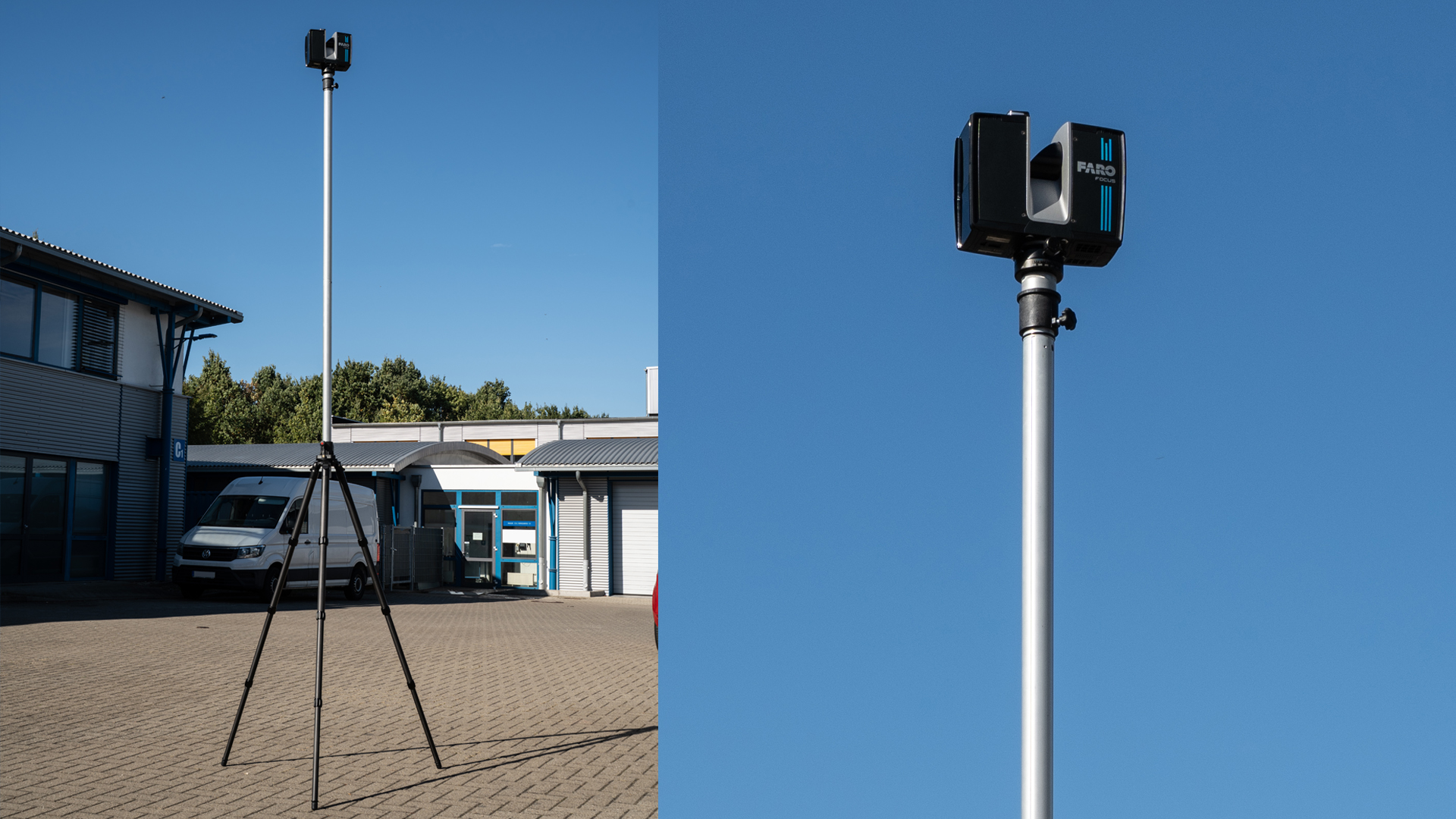
With the 2-way extension, an effective working height of 3.40 metres can be achieved when the carbon fibre tripod is fully extended. This height allows for higher scanning positions, enabling even more flexible and effective scanning.
TitleLighter weight, faster workflow
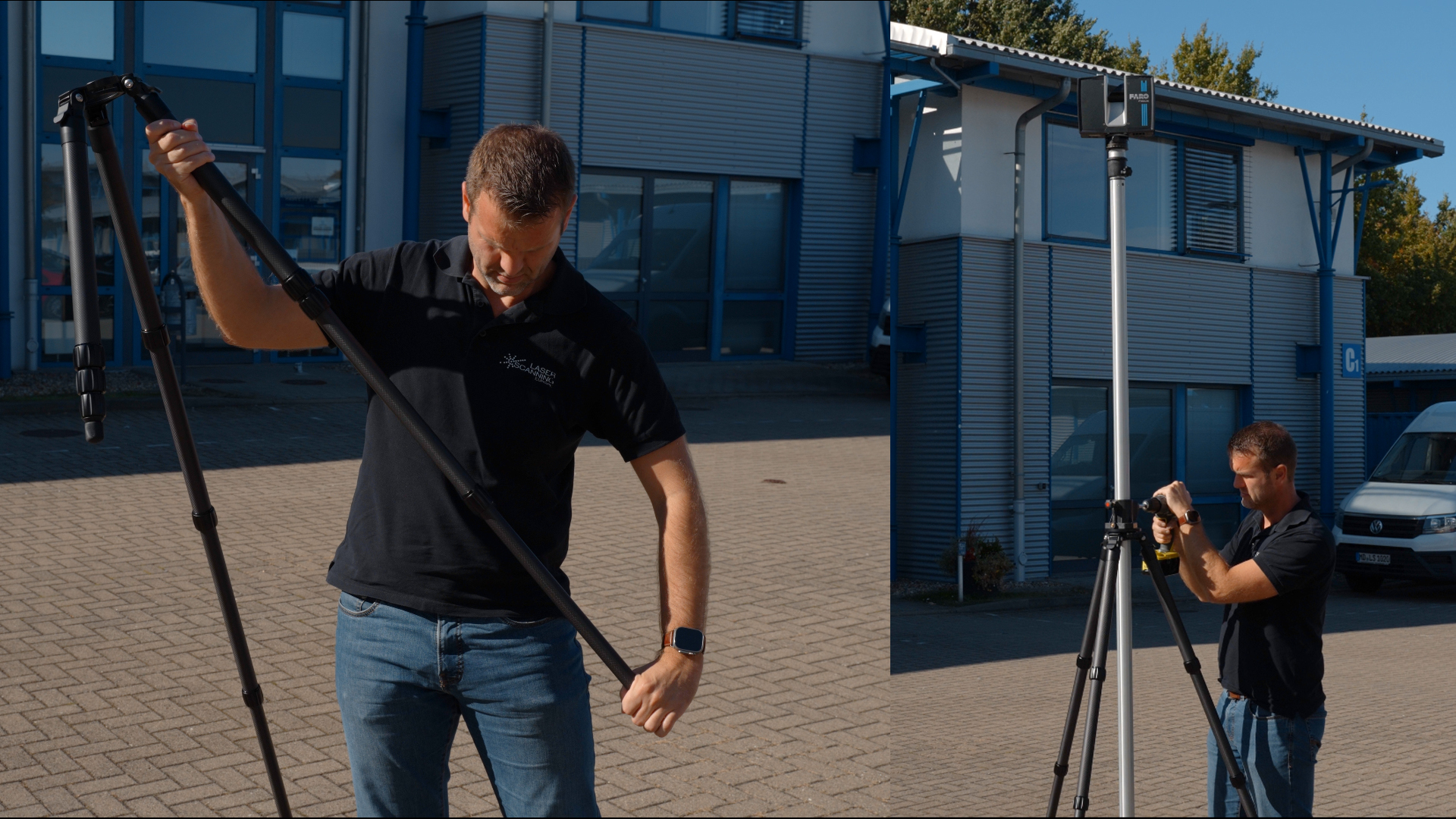
A key advantage over the traditional 2-way tripod is the carbon fibre tripod’s lighter weight. This is particularly noticeable during transport and handling, especially when scan positions change frequently or during longer assignments.
The combination also offers advantages when setting up: the carbon fibre tripod can be erected quickly, enabling a swift change between different scanning positions. This reduces the effort required on site and supports a more efficient workflow – particularly for projects where many measurement positions need to be set up in a short space of time.
TitleOverhead applications with greater reach
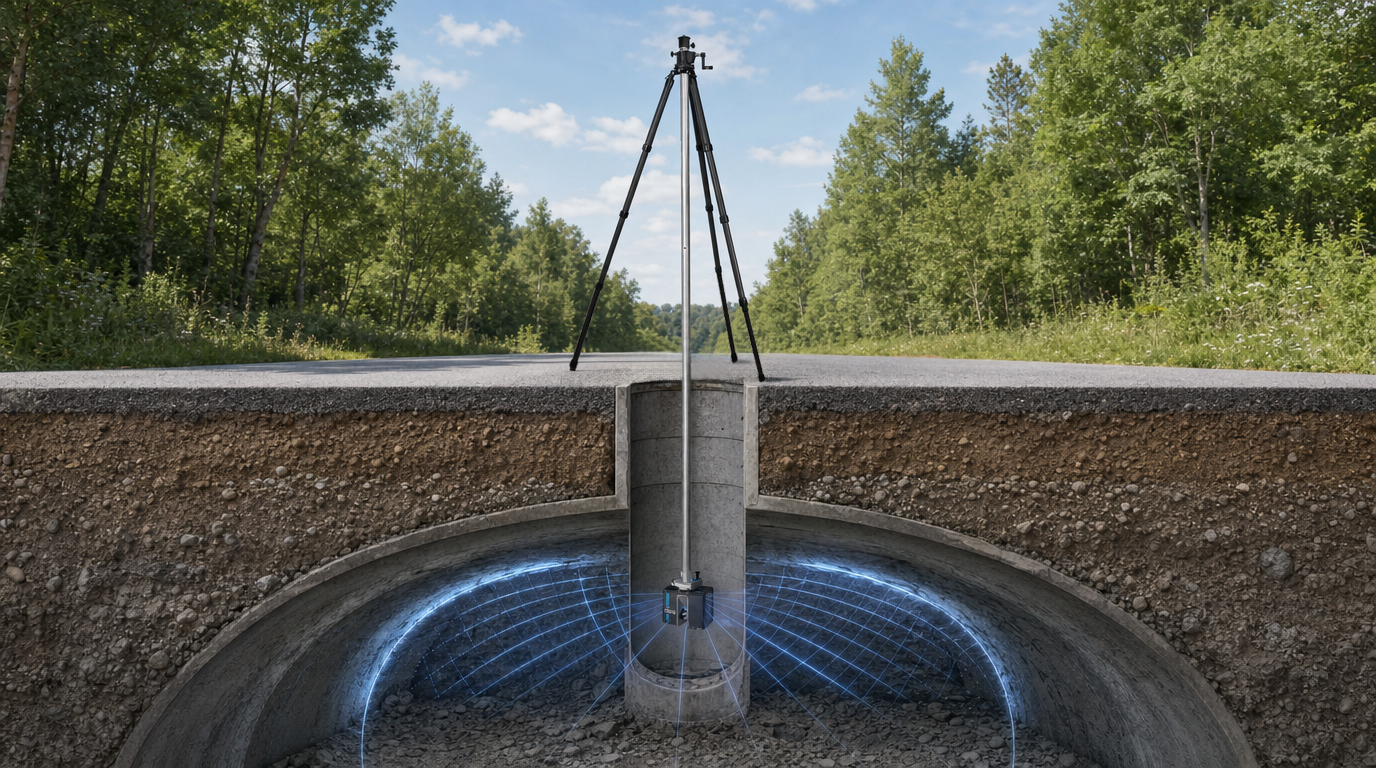
This combination is particularly useful for overhead applications. The 2-way extension allows for a working height of up to 3.40 m and a depth of 1.5 m below ground level when positioning the scanner overhead. This makes it possible to scan even higher or hard-to-reach areas.
This can be particularly helpful when the geometry of a room or the location of certain components places special demands on the positioning of the scanner.